New starter ramp-up time: how long does it take to train a new machine operator?
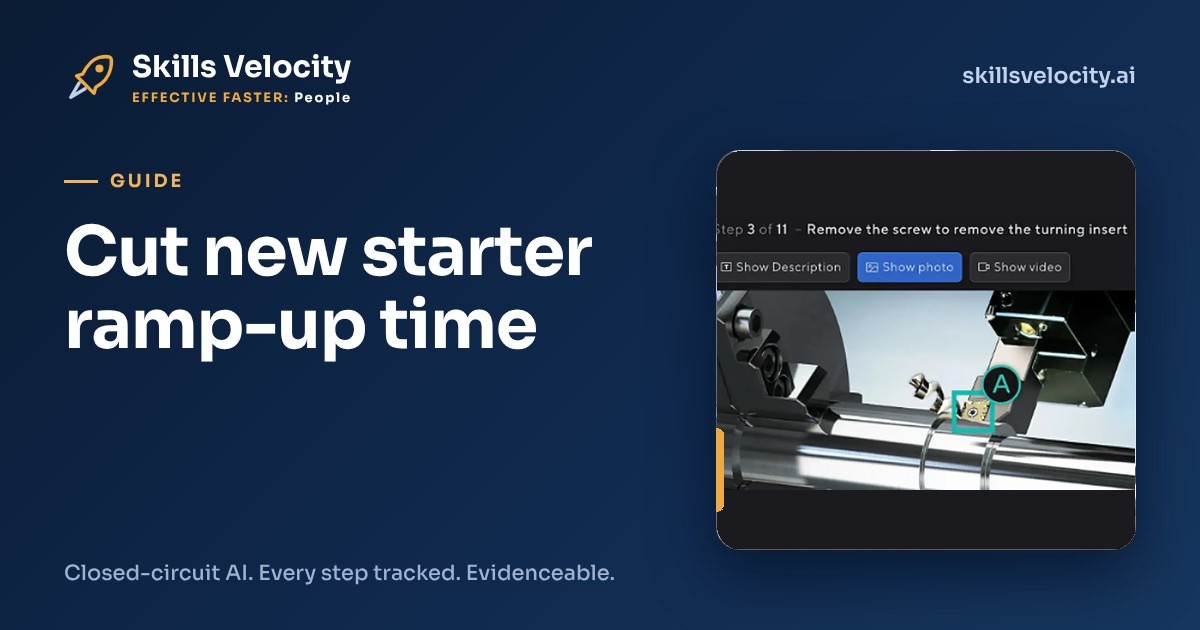
New starter ramp-up time is how long a new operator takes to do each task to standard without help. On many sites it runs to months, because starters learn by shadowing whoever is free. Measure it task by task, from start date to sign-off, and shorten it with guided steps on the current version.
Demand is up and you are hiring. The new starters arrive on Monday. Then the real wait begins: weeks of shadowing, questions your best engineer answers ten times a day, and a supervisor who cannot say who is ready for nights.
That wait is new starter ramp-up time. In manufacturing it decides whether a new contract ships on time. This guide shows what slows it down, how to measure it properly, and how to shorten it without cutting corners.
How long does it take to train a new machine operator?
It depends on the task, but a new operator on a complex process often takes months to reach full output, not days. The honest answer for your site is a number you measure per task, not a figure from a brochure.
The most quoted UK figure is old but useful. Oxford Economics research reported by HR Review in 2014 found that workers take 28 weeks to reach optimum productivity, at an attached cost of £25,181 per employee. That study covered five office and retail sectors, such as legal, accountancy and IT, not manufacturing. So treat it as a sense of scale, and measure your own line, where a starter must also be signed off on each procedure.
The weeks are not the whole cost. During the ramp, starters make more mistakes and lean on your experts. Both cost you twice: once in output, once in the time of the people you can least spare.
What slows a new operator down?
Three things slow most new operators: the method lives in people’s heads, the paperwork is hard to use at the machine, and nobody can see who is ready for what. Each one adds weeks.
- Shadowing whoever is free. Each experienced operator does the job a little differently. The starter learns a blend, including the shortcuts.
- Procedures that are hard to follow on the line. A long PDF SOP in a binder or on a shared drive is not much help with gloves on and a machine running.
- Experts as the bottleneck. Your best engineer can only stand beside one person at a time. Everyone else waits.
- No clear finish line. If “competent” is not defined per task, starters stay “in training” until someone feels confident.
The government’s Employer Skills Survey 2024 shows how common this is. In the full UK report, 67% of skills gaps were caused at least in part by employees being new to the role, and 58% by training being only partially completed. Much of the gap is the ramp-up.
How do you measure time to competence?
Measure time to competence per task: the days from a starter’s first shift to the date they are signed off doing that task unaided, to the current version, right first time. A role is ready when every task it needs is signed off.
Here is a simple way to set it up on Monday:
- List the tasks for the role. Keep it to the 10 to 20 tasks that matter, not every duty.
- Define the finish line for each. For example: done unaided, on the current version, right first time on 3 runs in a row, observed and signed off.
- Record the dates. Start date, each sign-off and the version it was signed against.
- Track the median, not the best case. The median starter shows what your process really delivers.
- Look at the slowest tasks first. They are where a better method pays back soonest.
The same record does a second job. It shows a customer or auditor who was competent on which task, to which version, and when. We set out what that record needs in operator competence records for ISO 9001 audits.
What does a slow ramp-up cost?
A slow ramp-up costs lost output from the starter and lost hours from your experts, and it grows with every person you hire. Put your own numbers into the table below to see it.
The numbers here are illustrative. Swap in your own.
| Item | Value |
|---|---|
| New operators this year | 20 |
| Weeks to full output | 24 |
| Average output during the ramp | 50% |
| Full-output weeks lost per starter | 12 |
| Full-output weeks lost in total | 240 |
| Expert time per starter, first 12 weeks | 3 hours a week |
| Expert hours spent on shadowing | 720 |
The 720 expert hours is about 18 working weeks of one senior engineer (at 40 hours a week), spent repeating the same explanations. Cut one week from each starter’s ramp and you gain about 10 full-output weeks across the 20.
Why is the ramp-up also a safety and quality risk?
Because new starters make more mistakes while they learn, and some of those mistakes hurt people or scrap product. The ramp-up is when your risk is highest.
HSE’s guidance for people new to the job puts it plainly: “Workers are as likely to have an accident in their first 6 months at work as during the whole of the rest of their working life.” It tells employers to give relevant information, instruction and training, and to provide adequate supervision.
For a quality leader, the same months are when a skipped check or a wrong sequence is most likely. One missed step on a custom batch can cost six figures. That is why we talk about getting work right first time, not just faster.
How do guided steps shorten new starter ramp-up time?
Guided steps put your best operator’s method in front of every starter, one step at a time, at the machine. Starters stop waiting for help, experts stop repeating themselves, and you can see who is ready.
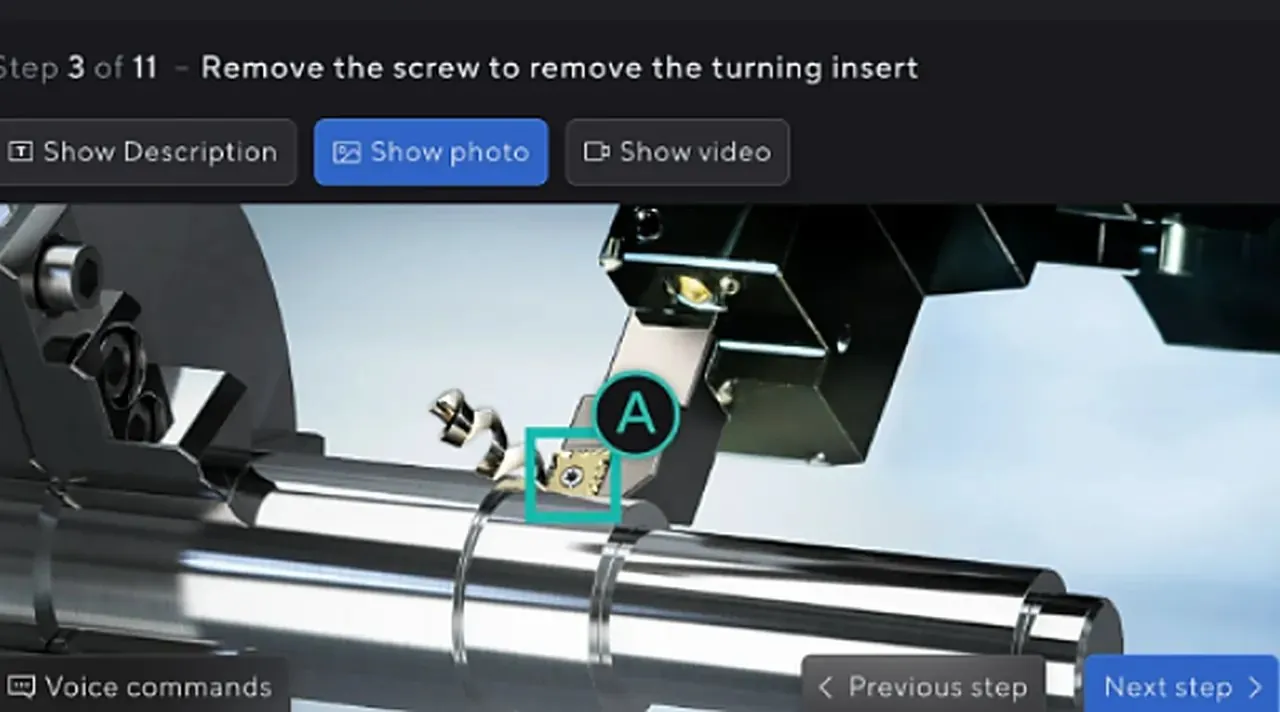
- One method, not a blend. Everyone learns the approved way, not whoever’s shortcut was nearest.
- Answers at the machine. Starters search by voice and land on the exact step, as in voice-searchable work instructions.
- Errors advised. If a starter tries to skip a check, they are advised before they move on.
- Experts freed. Your engineer films the task once and answers the hard questions, not the same easy ones.
- A visible finish line. Each sign-off is dated and tied to a version, so a supervisor can see who is ready for which task.
What does Skills Velocity do about it?
We help new operators get effective faster, right first time, with the record of each sign-off ready when a customer or auditor asks.
- Film the task once. Your best engineer does the job and talks it through. NSFlow turns the recording into translated, step-by-step work instructions. See the capture step and our smart glasses work instructions page.
- Guide each step, hands-free. Starters follow on smart glasses, a tablet or a phone. Closed-circuit AI answers only from your approved content, inside an environment you control, as described on our sovereign, closed-circuit AI for manufacturing page.
- Prove who is ready. Every step, check and sign-off is tracked against a person, a time and a version. That record becomes your evidence of faster onboarding and proven competence.
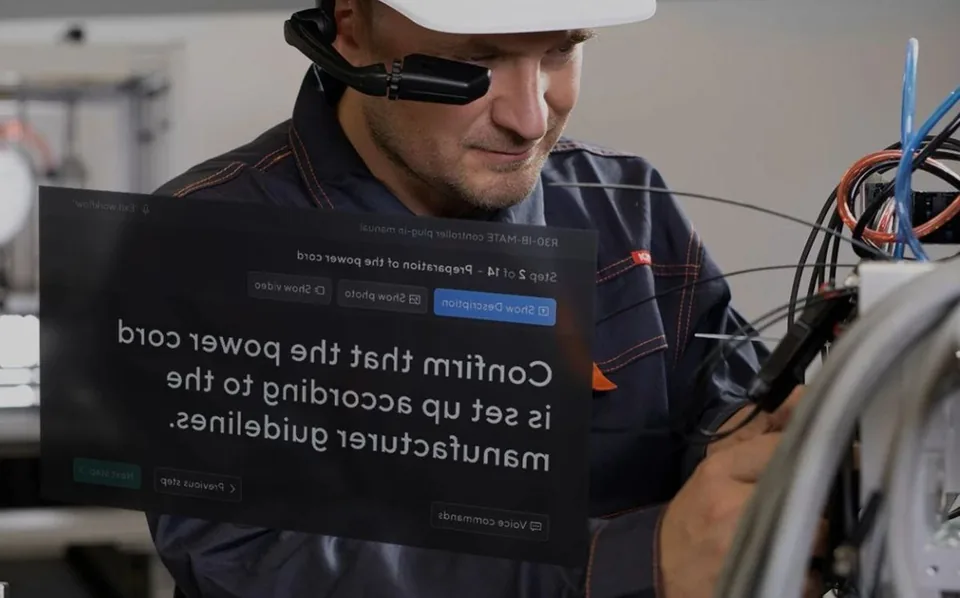
The first workflow is live in hours. If your experts are close to retiring, read key-person risk and how to capture expert know-how too.
Next step
Two ways to see it on one of your tasks:
- Book a demo. Bring the task your starters find hardest, and we will turn it into guided steps while you watch.
- Send your SOP, see it play. Email mark@skillsvelocity.ai with one procedure. A redacted or non-sensitive example is fine.
Frequently asked questions
How long does it take to train a new machine operator?
It depends on the task and the site, but complex processes often take months. Oxford Economics research reported in 2014 found UK workers in five office and retail sectors took 28 weeks to reach optimum productivity. Measure your own number per task, from first shift to the date each task is signed off.
What is time to competence?
Time to competence is the time from a new starter’s first shift to the date they can do a task unaided, to the current version, right first time. It is measured per task, and a role is ready when every task it needs has been signed off.
How can I reduce onboarding time in manufacturing?
Give every starter the same approved method at the machine, one step at a time, instead of shadowing whoever is free. Define a clear sign-off for each task, track the dates, and fix the slowest tasks first. Film your best operator once so experts stop repeating themselves.
Why do new starters take so long to become productive?
Usually because the method lives in a few heads, procedures are hard to use at the machine, and there is no clear finish line. The Employer Skills Survey 2024 found most skills gaps were linked to staff being new to the role or training only partly completed.
Are new workers more likely to have accidents?
Yes. HSE guidance says workers are as likely to have an accident in their first 6 months at work as during the whole of the rest of their working life. It asks employers to give relevant information, instruction and training, and adequate supervision.
How quickly can we try guided steps on one task?
The first workflow is typically live in hours. Pick the task your starters find hardest, film your best operator doing it once, approve the steps and publish. Or email one SOP to mark@skillsvelocity.ai and we will show it playing.